

Private credit fills the post-2008 regulatory gap left by Dodd-Frank Europe's bank-dependent market shifts as Basel rules bite Direct euro-area bank exposure stays small but concentrated Banks' share of busines
Read More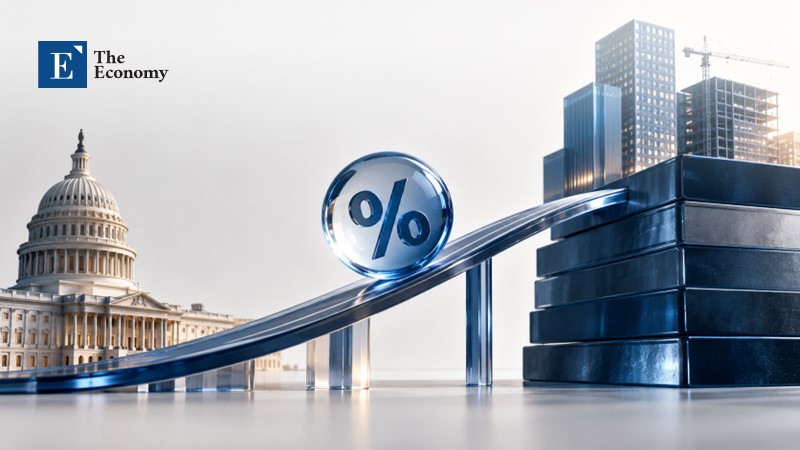
Study tests three explanations for r*'s post-2020 rise Fiscal news, AI news, Fed meetings all fail to explain it AI news lowers r*; the increase remains unexplained The United States' natural real interest rate, kno
Read More
The Economy Research Editorial*
Read More
China's growth model relied on cheap, precarious labor Consumption pivot needs secure income precarious workers lack Ruling-class "welfare" framing blocks meaningful labor redistribution In China, almost half of urban workers no lon
Read More
Türkiye's 2021–23 rate cuts and KKM shifted currency risk onto the state Washington and Tokyo now defend the yen via FIMA-collateralized borrowing instead Both cases buy time at rising cost, not remove the rate differential
Read More



Emerging-market firms pay a persistent country-level borrowing premium Deeper local savings can widen access and lower yields Financial liberalisation expands access but adds global-rate exposure A company
Read More
More information can worsen beliefs when signals are unrepresentative Trust shapes which economic signals households choose to believe Transparency works best when uncertainty and timing remain explicit In an international
Read More
AI adoption follows economics, not technical exposure alone Lower costs can expand demand rather than eliminate jobs Comparative advantage determines where automation becomes commercially rational Technically e
Read More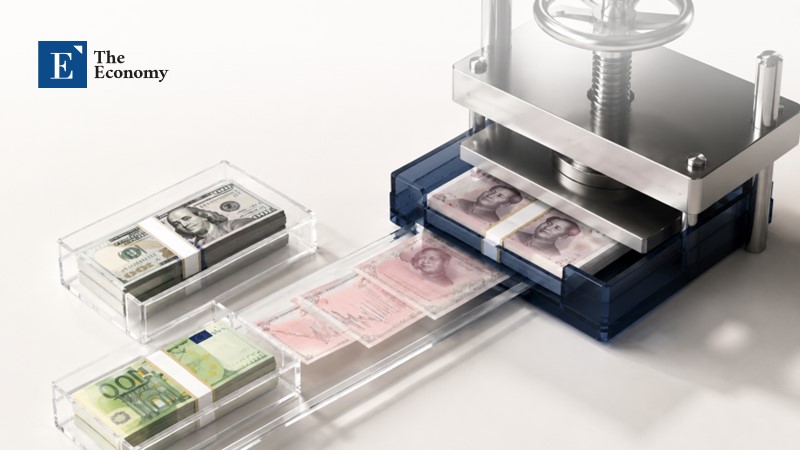
China’s trade power is becoming a financial transmission channel Emerging markets came first; advanced markets now respond too RMB policy could redirect larger Chinese capital flows abroad At the end of 2025,
Read More
Korea adopts AI faster than productivity grows AI gains remain concentrated in higher-paid work Implementation determines whether efficiency becomes output AI now saves the global economy about $2.7 trillion a year in
Read More

Growth equity bridges venture capital and traditional buyout investing It backs proven companies scaling without heavy leverage Fundraising pressure and liquidity needs are widening its role.
Read More
EU plans 1,600 new sanctions targets by October Shadow fleet sanctions grew, Baltic oil flows barely dropped Gas-price spike pulled more Russian LNG into Europe Kaya Kalas often repeats a number.
Read More
Russia claims stability; satellite data suggests otherwise Nighttime lights show persistent slowdown despite recovery claims Sanctions redistribute costs, concentrating damage in Russia's core The Russian Ministry of Econom
Read More
AI may boost growth but not fix U.S. debt Capital, not labor, captures most AI-driven income gains Political spending risks outpacing any real AI dividend The U.S.
Read More
Decoupling from China could cost $23.6 trillion Strategic dependence can make that cost economically rational Security benefits must be measured alongside economic costs The $23,6 trillion was released in July 2026 as a warn
Read More

Singapore and Hong Kong's dollar pegs fit stablecoins naturally Japan restricts issuance but absorbs liquidity institutionally Southeast Asia's remittance workers drive bottom-up adoption In 2025, stablecoin funds moving w
Read More
Berlin’s rent-cap legacy still depresses housing valuations Policy uncertainty pushed investors and builders toward caution Expropriation debate keeps regulatory risk embedded in prices By 2024, three years after Berlin's r
Read More
Supply chain diversification reduces exposure to regional shocks Resilience now matters alongside cost efficiency in sourcing Redundancy helps firms survive geopolitical and infrastructure disruptions As of Feb
Read More
Trump's Korea drill cut undercuts NATO's disciplined burden-sharing gains Seoul responded with avoidance, not compliance, bypassing Washington entirely Structured timelines work; personal impulse-driven pressure does not I
Read More
Foreign exporters absorbed nearly half the 2025 tariff shock, new data show Toyota cut export prices instead of raising costs for American buyers Currency depreciation added a second, quieter discount alongside price cuts Toyot
Read More